

LLM-Powered Knowledge Graphs: Unlocking Enterprise Intelligence from Your PSA Data
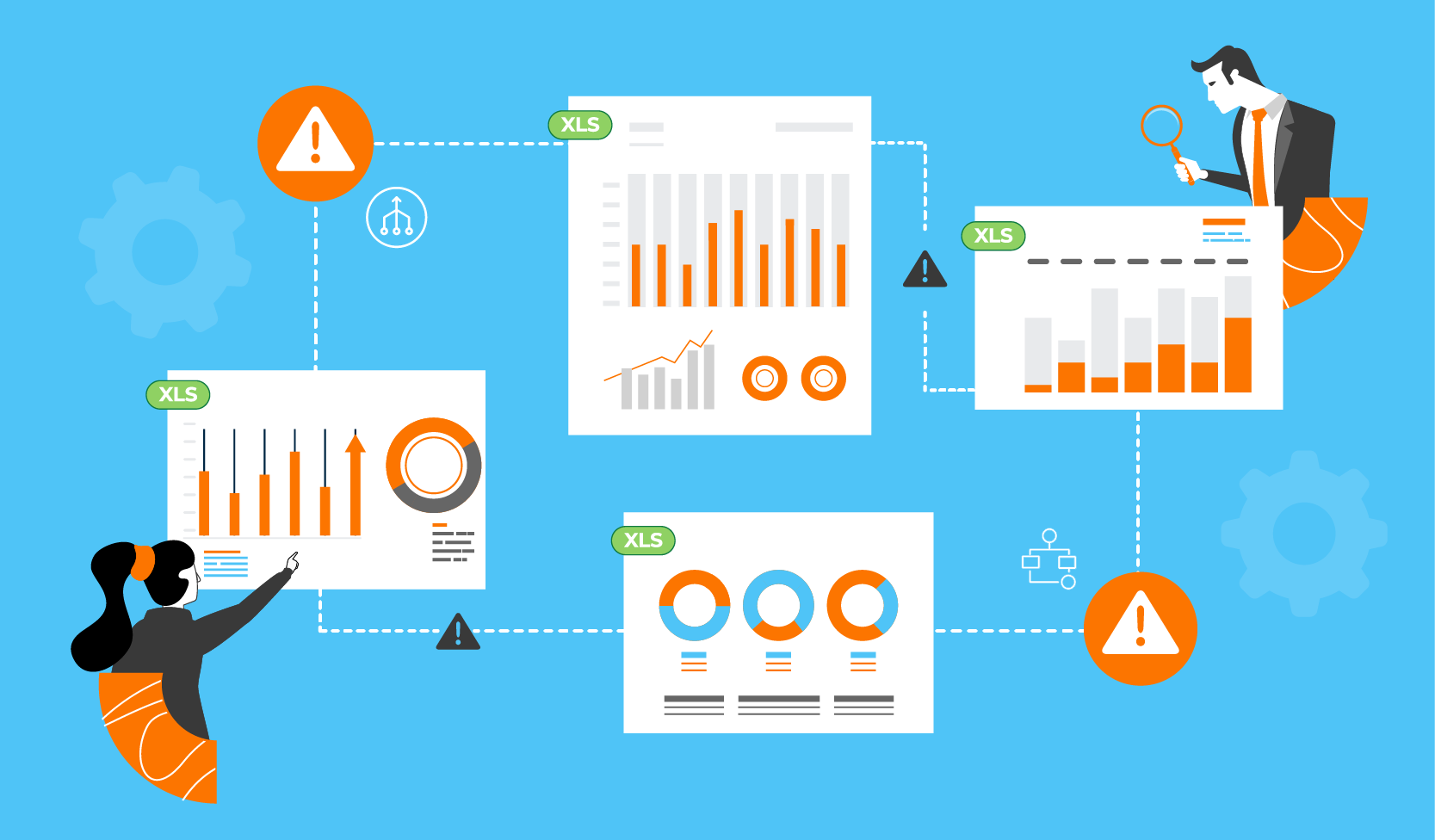
Professional Services Automation platforms capture the operational truth of a services business. Projects, skills, time, cost, margin, contracts, change requests, invoices, and client communications all live in, or feed, your PSA. Yet most firms still answer critical questions with spreadsheets and isolated reports. The result is limited context, slow root cause analysis, and decisions based on fragments rather than facts.
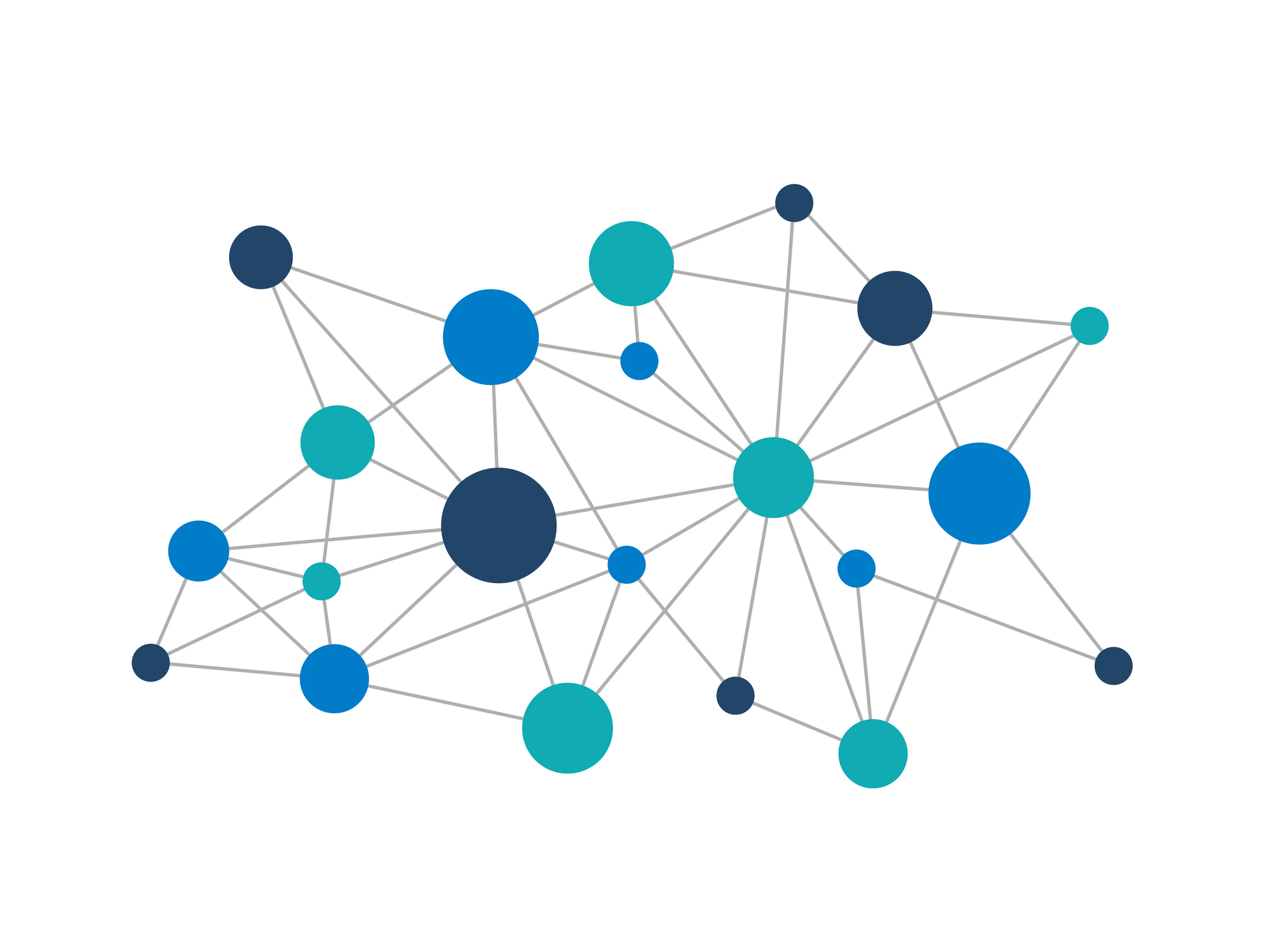
A knowledge graph built on PSA data provides a connected model of work, people, money, and commitments. Large Language Models enrich that graph with semantic understanding and natural language access, while the graph constrains the model to enterprise facts. The combination converts raw records into trustworthy answers, explanations, and recommendations that leaders can act on. This article sets out the architecture, governance, use cases, and accountability required to deploy LLM?powered knowledge graphs for real business impact without hype.
What a PSA actually knows
A mature PSA touches every stage of the services lifecycle. Typical data domains include:
- Commercial. opportunities, statements of work, rate cards, discounts, change orders, client hierarchy
- Delivery. projects, work breakdown structures, tasks, dependencies, milestones, risks, issues, retrospectives
- People. roles, skills, certifications, locations, cost rates, availability, utilization, burnout risk indicators
- Time and expense. timesheets, approvals, chargeability, non?billable categories, expenses with receipts
- Financials. budgets, planned vs actual cost, billing plans, invoices, credits, revenue recognition schedules, WIP
- Quality and satisfaction. deliverable approvals, acceptance notes, surveys, NPS comments, escalations
- Compliance. approvals, segregation of duties, access logs, data residency tags, audit trails
These datasets relate to one another. A margin variance often ties to specific skills, a missed milestone, a late change order, or a pricing exception. A graph makes those relations explicit and queryable.
Knowledge graph fundamentals for PSA
A knowledge graph models entities and their relationships using a shared vocabulary. In a PSA context, the core ontology usually includes:
- Entities. Client, Contract, SOW, Project, Phase, Deliverable, Milestone, Task, Resource, Skill, Certification, Location, Timesheet, Expense, Invoice, Purchase Order, Revenue Event, Risk, Issue, Change Request
- Relationships. Project belongsTo Client, Task requires Skill, Resource has Certification, Timesheet logsTo Task, Invoice billsFor Milestone, Revenue Event recognizesFrom Deliverable, Change Request modifies SOW, Risk impacts Milestone
Careful ontology design matters. Define canonical IDs, map synonyms, and set cardinality rules. Close gaps where different systems use different names for the same thing. The graph becomes the semantic layer that every report, search, and analysis can trust.
What LLMs add, and what the graph constrains
LLMs bring three capabilities that traditional BI stacks lack:
- Semantic matching. They connect free text to structured data. A prompt such as “show cloud migration projects at risk due to security skills” can resolve “cloud migration” to relevant project tags and “security skills” to your skill taxonomy plus synonyms.
- Natural language answers. They generate concise explanations with citations to graph nodes and edges, which helps stakeholders who do not live inside BI tools.
- Pattern extraction. They can extract entities and relationships from unstructured documents such as SOWs, emails, and acceptance notes, then propose links into the graph for review.
The knowledge graph keeps the LLM grounded. Retrieval and reasoning occur against governed facts. Answers cite nodes, relationships, and source documents. Guardrails reject outputs that cannot be supported by the graph.
Reference architecture
A practical design has layered responsibilities.
Data acquisition
Ingest from PSA, CRM, ERP, HRIS, ticketing, and document repositories. Use APIs where possible. Normalize timestamps, currencies, and identifiers. Preserve source system keys.
Entity resolution and ontology mapping
Match clients across CRM and PSA. Map skills from HR to delivery tags. Consolidate duplicate projects or resources. Enforce the ontology with validation checks.
Graph store
Choose a graph database or a lakehouse with graph semantics. Store nodes, edges, properties, and provenance. Maintain version history to support audit and what?changed analysis.
Embedding and retrieval
Generate embeddings for texts such as SOWs and meeting notes. Index them with references to graph nodes. Use hybrid retrieval, structured graph queries and vector search together, to answer both precise and semantic questions.
Reasoning and orchestration
Route user questions and system jobs to the right pipelines. For example, Q&A calls a retrieval?augmented generation flow that queries the graph, brings back facts with citations, then drafts an answer. An extraction job runs an LLM to parse a contract and proposes new nodes and edges for human review.
Governance and security
Apply row?level and attribute?level access that mirrors PSA and ERP policies. Mask sensitive fields where appropriate. Log every query, every write, and every model decision with user and purpose.
Experience layer
Provide role?specific apps. Executives see portfolio answers. PMs get project diagnostics. Finance views margin explanations. HR sees skill gaps tied to pipeline. All experiences draw from the same graph.
Priority use cases that pay for the platform
Focus on scenarios where disconnected data causes cost or risk. Five high?value examples:
1. Margin assurance with explanations
Question. Why did margin fall on Project Alpha.
Answer pattern. The graph traces variance from invoice to billed milestones to tasks to timesheets and roles. It explains that fixed price work added an unapproved scope change, that the work used a higher cost location, and that two weeks of rework were logged as non?billable. It cites the change request, the time entries, and the rate card. Finance gets a precise list of corrections and a forward view of margin at completion.
2. Skills to work matching at scale
Question. Which resources can staff a data privacy remediation in regulated markets.
Answer pattern. The graph filters by skills, certifications, client access rules, and location constraints. It ranks candidates by recent performance on similar tasks and by availability. HR sees training gaps and a list of near?fit candidates with the one certification to acquire.
3. Contract compliance and change control
Question. Where are we delivering outside SOW bounds.
Answer pattern. The graph aligns SOW clauses, accepted deliverables, and time logs. It surfaces work on deliverables not listed, tasks that exceed effort caps, and milestones completed without formal acceptance notes. Legal receives a documented basis for change orders.
4. Revenue recognition evidence
Question. Can we support the revenue event on a milestone.
Answer pattern. The graph bundles the acceptance email, the deliverable version, the milestone closure, and the invoice. It highlights any missing artifact. Finance obtains audit?ready evidence with a single reference.
5. Client health and expansion signals
Question. Which clients are at risk and which are primed for expansion.
Answer pattern. The graph combines satisfaction surveys, escalation counts, delivery variance, and invoice disputes. It adds semantic analysis of open?ended comments. Sales, delivery, and success teams get a list of accounts with reasons and recommended actions.
Each case removes manual reconciliation, shortens decision cycles, and reduces leakage or risk. The graph earns its keep by answering specific questions that previously required many meetings and spreadsheets.
Data quality and lineage you can trust
An LLM on poor data is a liability. Evidence?grade quality control is non?negotiable.
- Provenance on every edge. Store the source document, system, user, and version that created each relationship.
- Validation rules. A time entry must link to an approved task, and an invoice must link to a billing plan and a tax rule. Reject writes that violate the ontology.
- Reconciliation checks. Daily balances of WIP, billed amounts, and recognized revenue between PSA, ERP, and the graph. Mismatches produce tickets with pointers to the offending nodes.
- Master data stewardship. Owners for clients, projects, rates, and skills manage merges and changes. Stewardship actions are logged and reversible.
- Sensitivity classification. Mark PII, commercial terms, and security credentials. Apply masking and access policies that match your controls.
These practices keep LLM outputs grounded and defensible.
How to measure success
Do not report vanity metrics about queries answered. Track outcomes that reflect business value and governance.
- Answer fidelity. Percentage of answers with complete citations to graph nodes and documents. Target near perfect coverage for financial and contractual questions.
- Correction rate. Frequency of user?flagged inaccuracies per one hundred answers. Trending down indicates improving data quality and prompt design.
- Time to insight. Median time from question to accepted answer for the top use cases. Replace meetings and manual consolidation with minutes in the experience layer.
- Leakage recovered. Value uncovered and invoiced due to SOW or timesheet reconciliation insights.
- Audit sufficiency. Proportion of revenue events and invoices with full supporting artifacts linked in the graph.
- Adoption by role. Weekly active users by executive, finance, delivery, and HR cohorts. Adoption follows trust.
- Policy compliance. Percentage of queries that pass access checks and content policies. Zero tolerance for violations.
These metrics create accountability and keep the program focused on outcomes.
Cost drivers and architectural trade?offs
Plan for the following levers.
- Storage. Graph nodes, edges, and document embeddings grow with history and scope. Tier storage and prune obsolete embeddings with retention policies.
- Compute. Entity resolution, embedding generation, and extraction jobs are the heavy hitters. Batch non?urgent work and cache intermediate results.
- Inference. LLM call volume depends on usage patterns. Use smaller models for classification and extraction where possible, and reserve larger models for complex reasoning.
- Integration. API quotas and iPaaS costs add up. Consolidate calls and prefer event streams for incremental updates.
- Operations. Monitor graph health, queue depth, failed writes, and model latency. Assign on?call ownership like any other production system.
A lean, well?governed design beats a feature?rich but fragile one.
Role?based accountability
CIO or CTO
Own the architecture and reliability. Approve technology choices for the graph store, orchestration, and security. Commit to service levels and continuity plans.
Chief Data Officer
Own ontology, quality, lineage, and stewardship. Chair the data council that resolves definitions, duplicates, and mapping rules. Publish the glossary and enforce change control.
CFO
Own financial truth. Define how margin, revenue, WIP, and leakage are calculated in the graph. Require citations and evidence on any answer that touches financial statements.
COO and PMO
Own operational adoption. Set expectations for timesheet hygiene, milestone discipline, and change control. Use graph insights in weekly reviews and portfolio decisions.
CHRO
Own the skills taxonomy and role definitions. Keep certifications, cost rates, and locations accurate. Use graph outputs to guide hiring, mobility, and learning plans.
Security and Compliance
Own policies and enforcement. Approve access models, masking rules, and retention schedules. Test that the experience layer never discloses restricted content.
Clear ownership prevents the platform from becoming a science project.
Implementation path without theatrics
A dependable rollout follows a pragmatic sequence.
- Select two high value use cases and define the ontology slice they require. For example, margin assurance and SOW compliance.
- Integrate PSA, ERP, and document sources for those cases. Build reliable pipelines with retries and monitoring.
- Stand up the graph and enforce validation. Load a small but clean subset. Fix master data conflicts before expanding.
- Add retrieval and citations. Ensure every answer points to nodes and documents. Refuse answers that lack evidence.
- Pilot with accountable leaders. Replace a recurring manual review with the new experience. Capture decisions and corrections.
- Expand to the next use case and data domains. Keep scope disciplined. Grow by value, not by dataset count.
This approach builds trust and a backlog of demand without overselling.
Build, buy, or blend
- Use your PSA vendor’s analytics where possible. Many provide events, APIs, and standard models that cut effort.
- Adopt a commercial graph store or a lakehouse with graph capabilities. Avoid bespoke engines that limit skills and support.
- Blend open components for RAG and orchestration with enterprise controls. Abstract the model layer so you can switch providers or sizes without rewrites.
The best solution fits your team’s skills and your control requirements.
Conclusion
A services business runs on relationships among work, people, contracts, and cash. Traditional reporting slices those relationships into columns and charts. A knowledge graph gives them structure. An LLM provides the language interface and semantic lift. Together, they let leaders ask precise questions and receive supported answers that tie actions to outcomes.
Start with the outcomes that matter, margin assurance, contract control, staffing precision. Model only what those outcomes require. Ground every answer in the graph with citations and access checks. Hold roles accountable for data quality and adoption. When PSA data is connected and intelligible in this way, the organization gains an operating advantage that is hard to copy and easy to measure. The intelligence was already in your systems. The graph and the model make it usable.